
For Care Coordination / Transitions
Care Coordination / Transitions teams need a system that supports the whole care path.
Give care coordination teams one place to manage task routing, barriers, caregiver education, and follow-up after discharge.
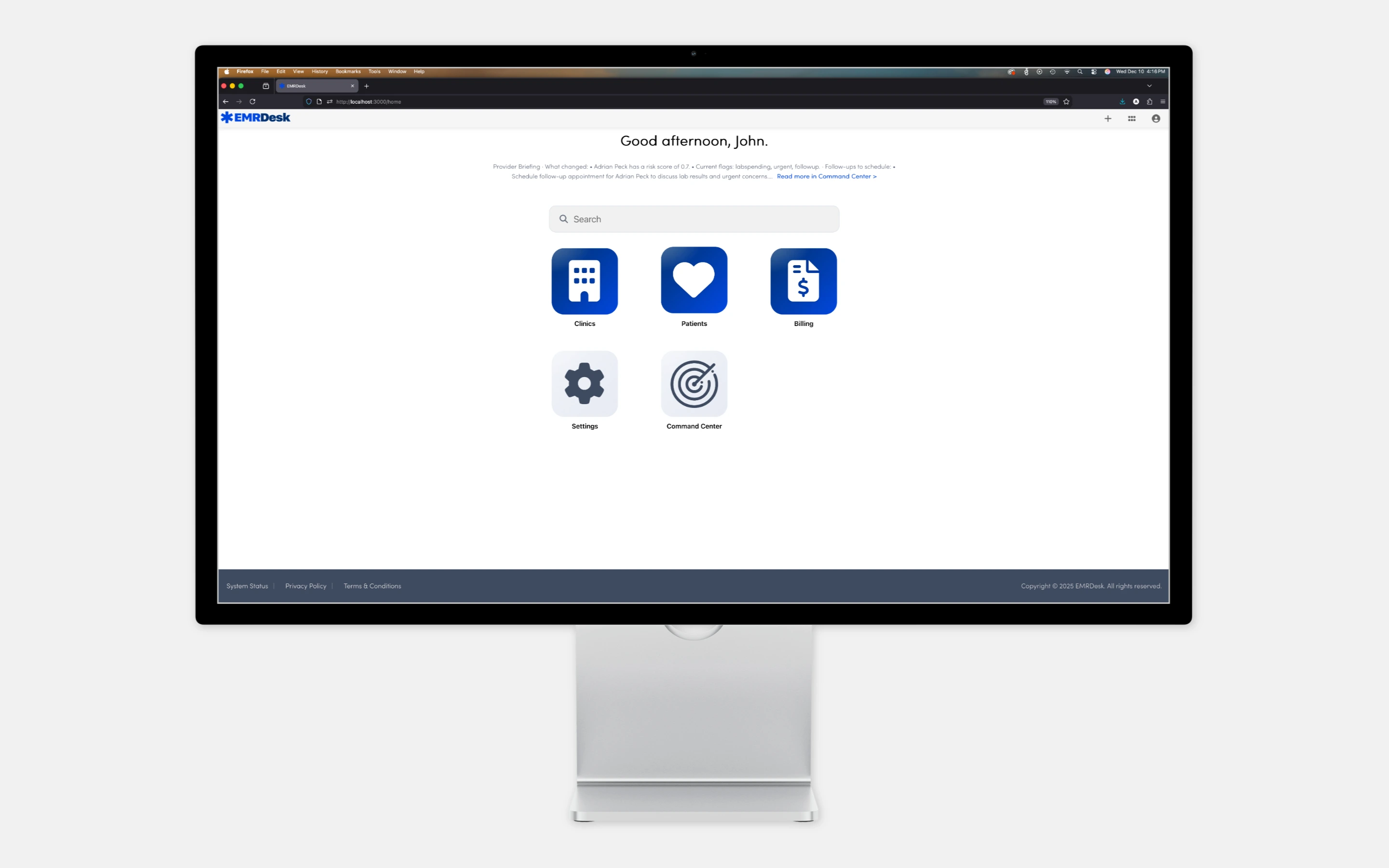
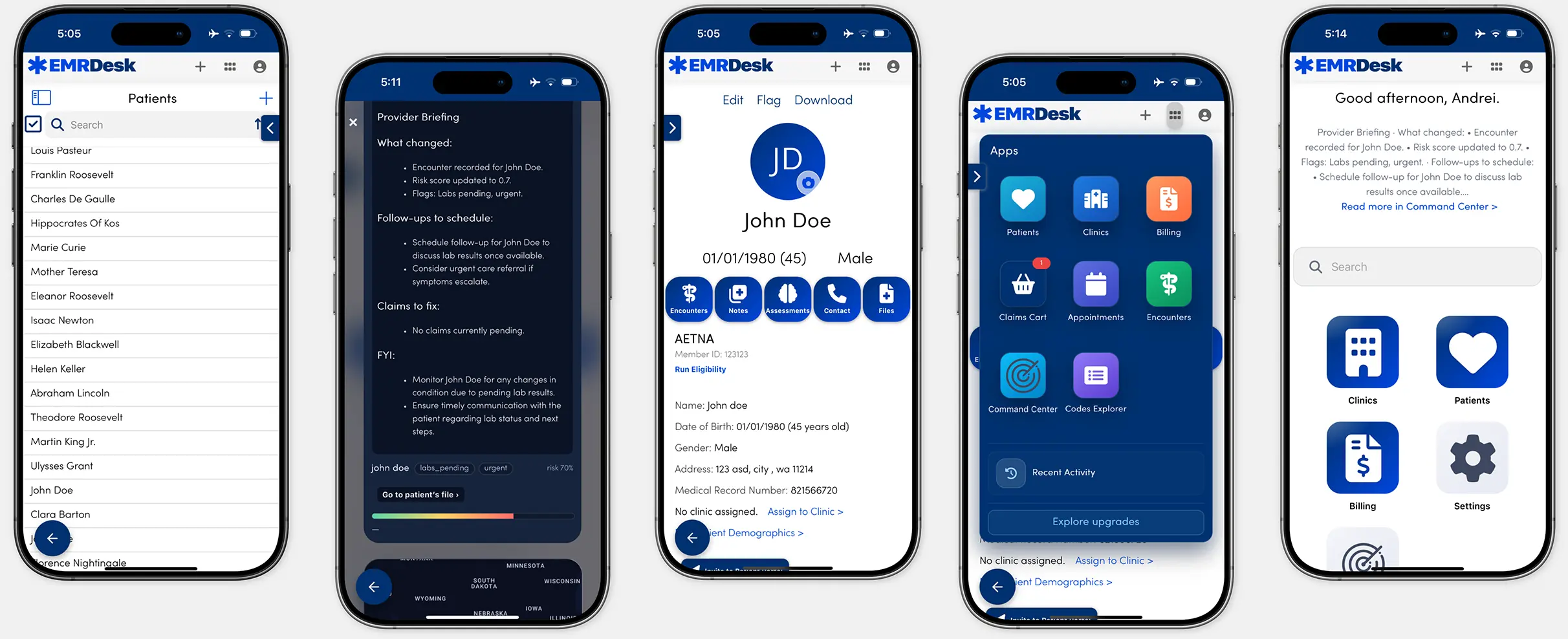
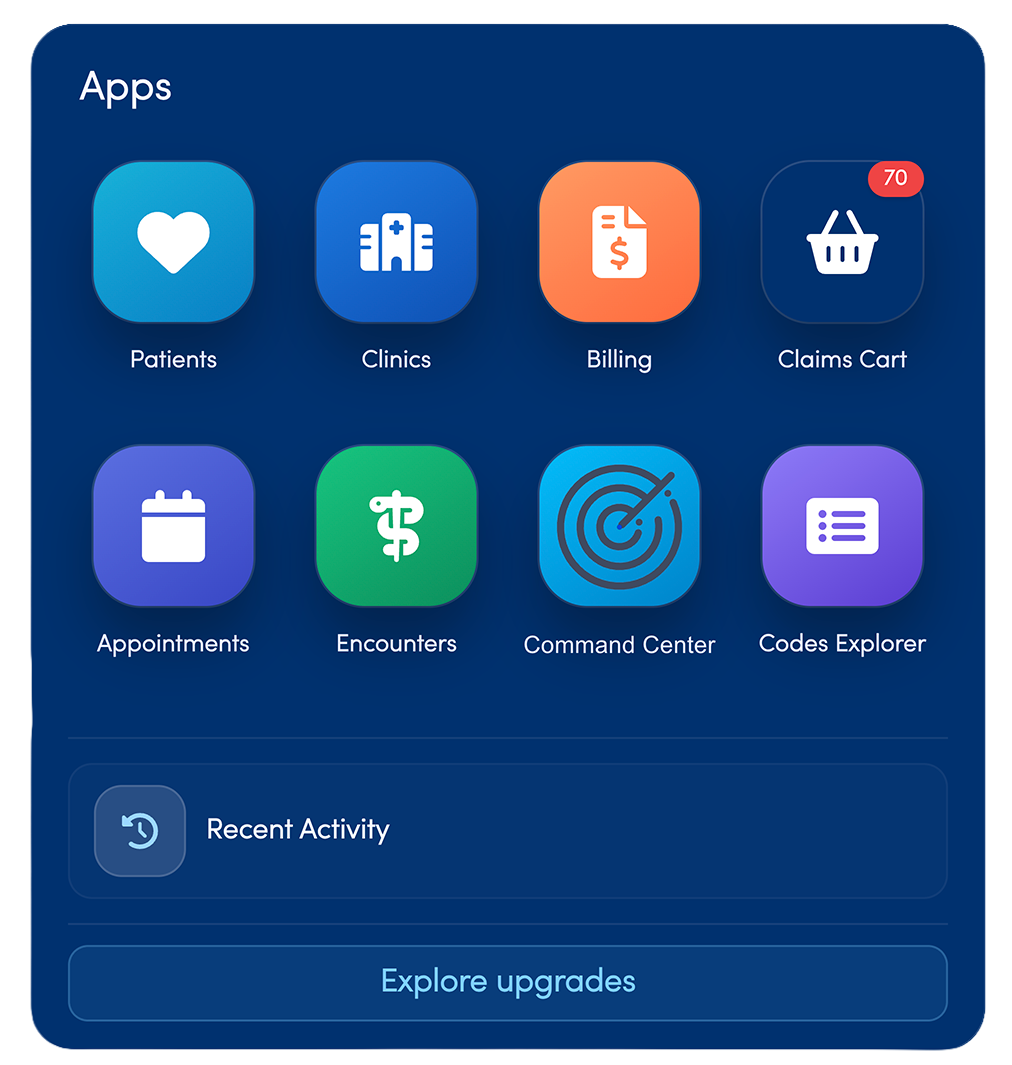
See what your care coordination / transitions team can do
Care lifecycle
Every stage of the care coordination / transitions workflow covered.
Give care coordination teams one place to manage task routing, barriers, caregiver education, and follow-up after discharge.
In-house applications
Each application gets its own role in the specialty workflow.
Shared tools and specialty-specific patient view apps stay in one operating system, so the team can move through the day without rebuilding context.
01
AI Scribe
Connect more with patients while the note gets drafted.
Let the AI scribe listen to the encounter and make notes for you, with review and sign-off kept inside the clinical workflow.
- Listen to the encounter while the team stays present.
- Draft structured notes for clinician review.
02
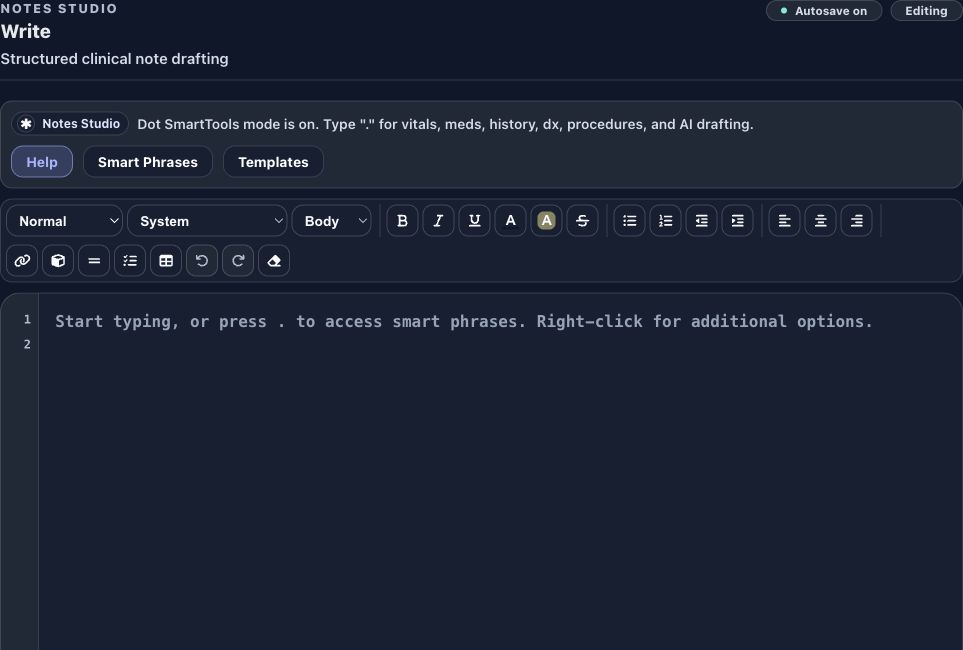
Notes Studio
Save time with Note Studio.
Create templates, add history, codes, medications, and diagrams while keeping the note close to the patient record.
- Create reusable templates for common visit types.
- Keep charting close to the patient record.
03
Encounters
The visit becomes a complete operational record.
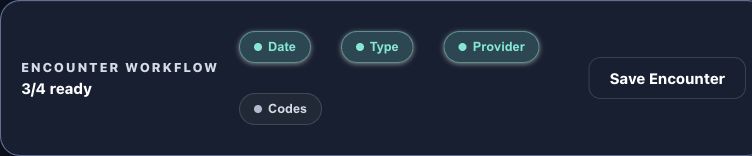
Encounters connect the visit type, provider, codes, forms, linked notes, tasks, and next actions in one workflow.
- Track visit details, linked documentation, and codes.
- Move cleanly from clinical work to downstream operations.
04
Form Creation
Forms can match the way each specialty works.
Custom forms help teams capture the exact questions, assessments, screenings, and intake details their workflow needs.
- Build specialty forms without a separate tool.
- Attach form responses to the clinical workflow.
05
Care Plans
Plans and follow-up stay attached to the workflow.
Care plans help teams keep next steps, monitoring, and coordination visible after the visit or handoff is complete.
- Define the next steps after the visit.
- Keep monitoring and coordination visible.
The plan
Here is the care path this page is built to support.
1
Discharge planning and transition prep
Each step should hand the right context to the next person so the patient journey keeps moving.
2
Task routing and barrier tracking
Each step should hand the right context to the next person so the patient journey keeps moving.
3
Caregiver education and outreach
Each step should hand the right context to the next person so the patient journey keeps moving.
4
Follow-up coordination and next-visit readiness
Each step should hand the right context to the next person so the patient journey keeps moving.
See the product
You should be able to picture how the workflow looks before you commit.
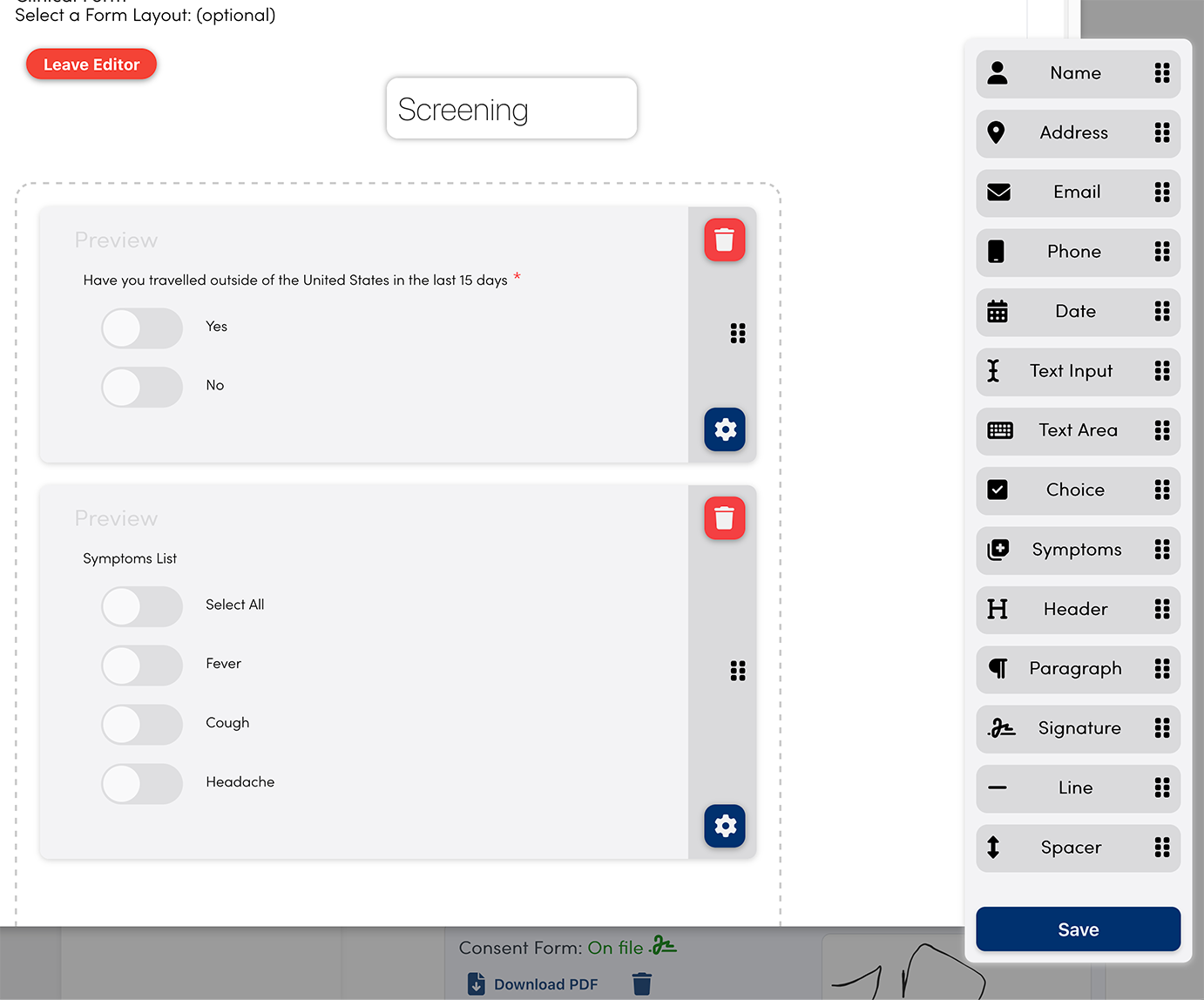
Start with the right patient story
Capture forms, screenings, and consent before the visit so the team does not rebuild the story later.
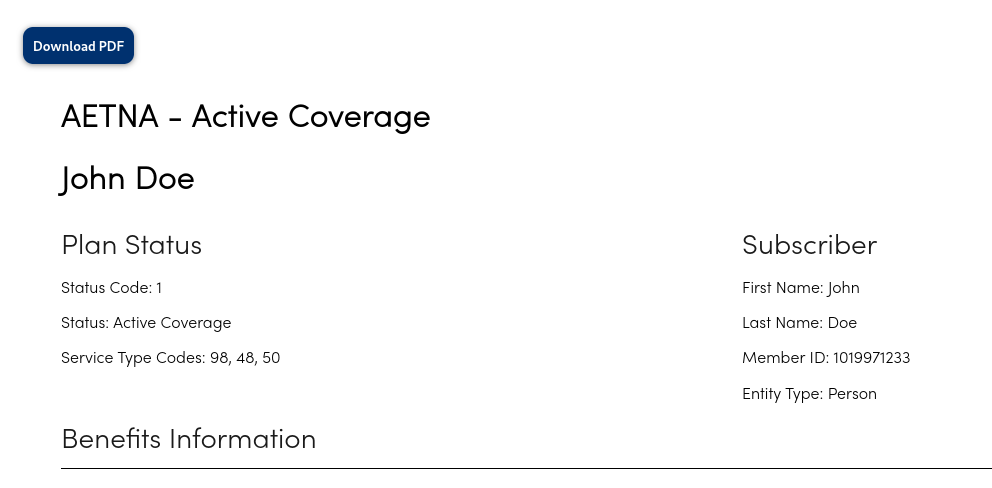
Keep revenue tied to care
Carry coverage checks, coding, claims, and reimbursement through the same workflow instead of turning billing into a separate scramble.
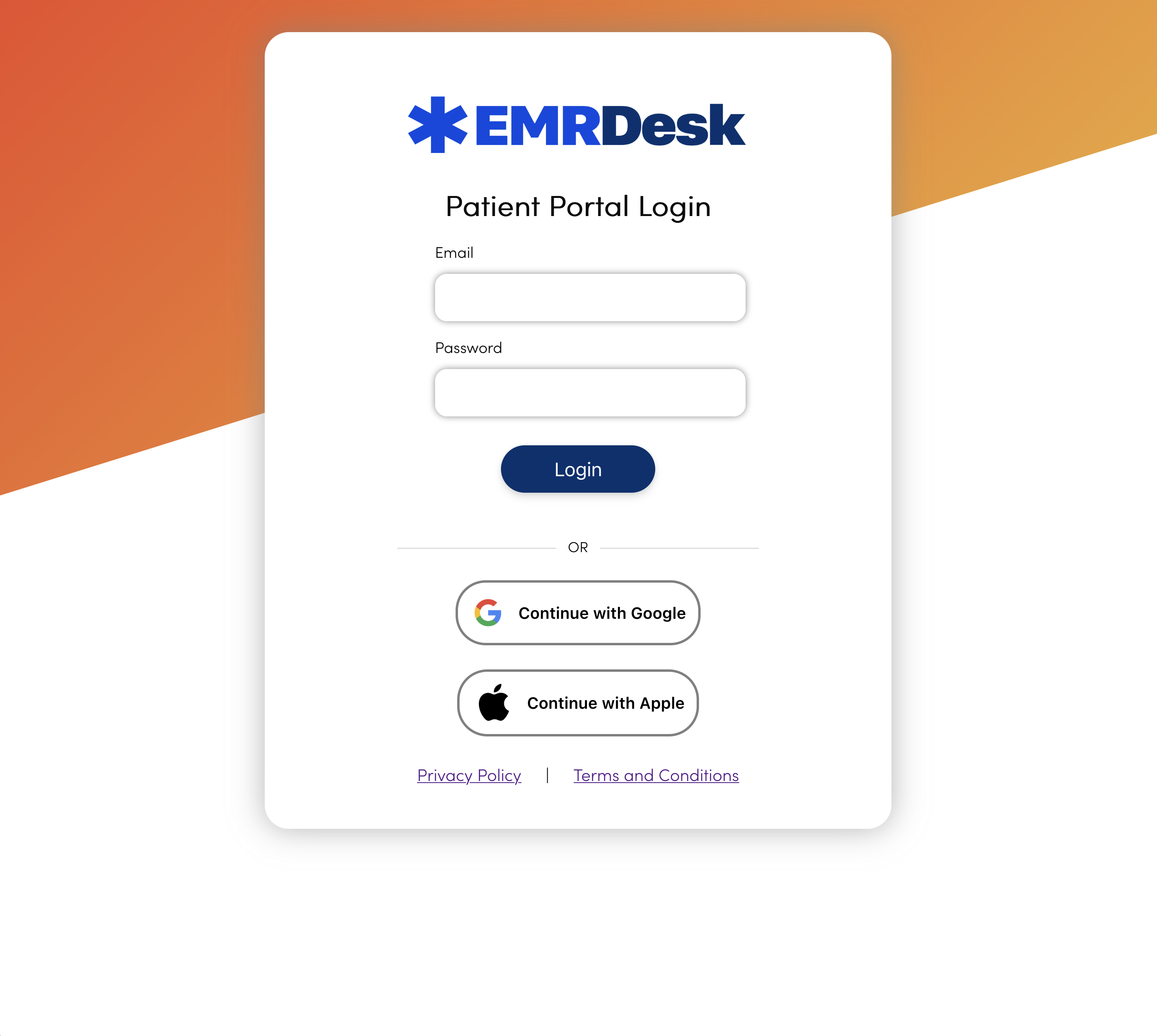
Make the next step obvious
Keep portal access, outreach, and follow-up attached to the record so patients and staff know what happens next.
Key apps
These are the specialty apps your team uses to keep the care path moving.
Hub
Built into the specialty workspace so your team can handle this step without leaving the patient record.
Discharge
Built into the specialty workspace so your team can handle this step without leaving the patient record.
Tasks
Built into the specialty workspace so your team can handle this step without leaving the patient record.
Barriers
Built into the specialty workspace so your team can handle this step without leaving the patient record.
Caregiver
Built into the specialty workspace so your team can handle this step without leaving the patient record.
Care Plans
Built into the specialty workspace so your team can handle this step without leaving the patient record.
What gets better
When the workflow is connected, the team gains clarity and the patient experience gets steadier.
Discharge work does not disappear into notes and callbacks after the patient leaves the setting.
Care managers can see tasks, barriers, and follow-up status from one connected workspace.
Patients and caregivers get a clearer next step when education and coordination stay attached to the record.
Rollout plan
Start with the core workflow, then expand once the team has the rhythm.
Suggested rollout
Start with transition tracking, task routing, and follow-up readiness. Expand into caregiver education, barrier management, and longer-horizon care planning once the handoff rhythm is stable.
Take the next step